

Jin Yong‘s wuxia(武俠) novels have a widespread fans in Chinese communities worldwide. His 15 works written between 1955 and 1972 earned him a reputation as one of the greatest and most popular wuxia writers ever. By the time he passed away in 2018, he was the best-selling Hong Kong author, and over 100 million copies of his works have been sold worldwide(not including an unknown number of pirated copies).
His works have the unusual ability to transcend geographical and ideological barriers separating Chinese communities of the world, and he is good at describing the plots in the vivid and enchanting ways, bestowing all characters with real souls and strong personalities, and intergrating some history facts into the fictional plots. The historical figures in novels often intermingle with fictional ones. Therefore, his works are always impressing the first readers, inspiring them to read the same plot again and again, furthering willing to read the next work.
Jin Yong’s references of novels’ contents can trace from traditional Chinese medicine, acupuncture, martial arts, calligraphy, Chinese chess(wei qi), tea culture, traditional Chinese music, and philosophical schools such as Confucianism, Buddhism, and Taoism.
Before continuing, I would like to answer questions “Wuxia(武俠) is kung fu(功夫)?”, “Wuxia is related to thief?”. They are not purely correct answers actually. Wuxia is not just kung fu but includes diverse elements of brotherhood, champion of justice, chivalrous spirits ,and empathy for the society.
What’s more, Jin Yong’s works also show a great deal of respect and approval of Chinese values, especially Confucian ideals such as the proper relationship between rulers and subject, parent and child, master and apprentice. However, some figures in novels are oppositely challenging these tradtional values. For example, in The Condor Heroes(神鵰俠侶), the two leading characters, Yang Guo(楊過) and his teacher, Xiao Long Nu(小龍女), have romantic relationship and get married finally, which is not acceptable from the traditional perspectives at that time. However, in the current society, the thing that the student gets married with their teacher seems more acceptable, such as French president, Emmanuel Macron and his high-school teacher and wife, Brigitte Trogneux.
Jin Yong has many fans outside of Chinese-speaking countries or regions as a result of the numerous adaptations of his works into films, television series, comics and video games. Let’s list some examples below.
- 射鵰英雄傳 Shè diāo yīngxióng chuanˋ, Legend of the Condor Heroes


2. 神鵰俠侶 Shén diāo xiá luˇ Condor Heroes


3. 鹿鼎記 Lùdǐngjì The Deer and the Cauldron (the link is 鹿鼎記 Year 2008 version)


4.天龍八部 Tiānlóng bā bù, Demi-Gods and Semi-Devils


5. 笑傲江湖 Xiào ào jiānghú, The Smiling, Proud Wanderer
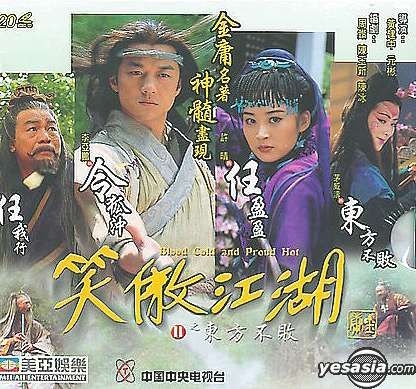
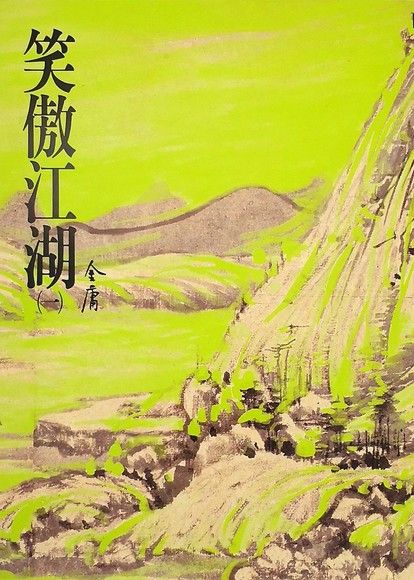
6.倚天屠龍記 Yǐtiān tú lóngjì , The Heaven Sword and Dragon Saber
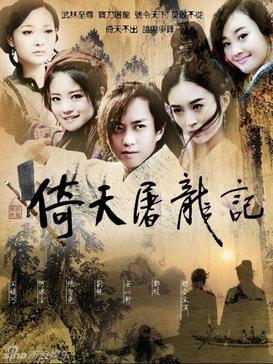

Here are the most famous 6 works of Jin Yong’s novels and adpated works. Others are like 碧血劍(Bì xueˇ jiàn, Sword Stained with Royal Blood), 雪山飛狐(Fox Volant of the Snowy Mountain), 連城訣(A Deadly Secret), and so on.

Jin Yong (金庸, 1924-2018), pronounced “Gum Yoong” in Cantonese, is a Hong Kong wuxia (“martial arts and chivalry”) novelist and essayist. He was born in Zhejiang Province, China in 1924, and passed away in Hong Kong in 2018.
photo souce: 獨立評論
 🚀🚀Mandarin Meta 華語元宇宙
One thought on “The most classic martial arts (Wuxia) novelist — 金庸 Jin Yong”